Battle Over Books

Intense debate over library books exists in the community. Other local media reported the conflict over the last two years. We will not rehash it here. Today, voters make their voices heard. The library vote is portrayed as an issue of “Do you want kids exposed to porn in the library?” The Kootenai County Republican Central Committee (KCRCC) waged a culture war during this election cycle weighing in on non-partisan issues such as school levies and library board candidates. For some, the loss of credibility for the KCRCC started with the behaviors of its hand-picked trustees of the NIC Board. Now that it is urging voters to defund schools, its influence again wanes. As election results come in, it will be interesting to see who wins the election for the library trustees. 

Some predictions:

  1. Record turnout for non-partisan Kootenai County election held in May
  2. CdA School District 271 levy will pass with >70% of the vote
  3. We want to opine that the incumbent library board members McCrea and Meyer will win, but residents in the city of Coeur d’Alene cannot vote in this race because the city library has it’s own board. Given that the most conservative residents live outside of the city, the close race will likely go to the most conservative, culture warrior candidates Tim and Tom. We hope we are wrong due to 1st Amendment rights and the thought that one’s values should not be imposed on another.

Coeur d’Alene Battles Light Pollution

O.P.

Coeur d’Alene night sky from high altitude, courtesy of John Pulsipher

Just this past Tuesday, Mayor Jim Hammond proclaimed that the week of April 15 – 22 will be International Dark-sky Week. The reason for this is because of light pollution. Light pollution is a very dangerous form of pollution. In the meeting, James Filmore spoke on light pollution. “The average night sky brightness has grown seven to ten percent every year for the last 12 years,” Filmore said. While this may not seem bad at all, National Geographic says otherwise. “Nocturnal light interrupts sleep and confuses the circadian rhythm—the internal, twenty-four-hour clock that guides day and night activities and affects physiological processes in nearly all living organisms. One of these processes is the production of the hormone melatonin, which is released when it is dark and inhibited when light is present. An increased amount of light at night lowers melatonin production, which results in sleep deprivation, fatigue, headaches, stress, anxiety, and other health problems.” This is very problematic. It ruins your sleep patterns and also causes health problems. So, why not help the cause? I contacted the mayor to learn what they are doing to prevent this. We’ll update this story when we hear from him.

-O.P.

Sources:

Coeur d’Alene City Council Meeting 4-4-23

National Geographic

NIC Land to Become Affordable Housing?

“It’s past time we build our own workforce housing.” -Christie Wood, CdA City Council member

Christie Wood advocates workforce housing on public lands. April 4, 2023, city council meeting

CdA Council Member Christie Wood called for partnerships to develop land owned by the city and North Idaho College into “workforce housing.” She cited concerns of increased rent, inadequate wages. Workforce housing would be for “[firefighters, police officers, teachers, and nurses.]”

The discussion occurred during Coeur d’Alene’s city council meeting this week after Greta Gissel presented on behalf of Connect Kootenai, formerly CDA 2030. Gissel conceded that rents are declining in the area, as are home prices. However, Wood advocated for a government solution to decrease the cost of housing in northern Idaho. The city purchased 47 acres in 2018 along the Spokane River for $7.9 million. They overtly guided the development until 2020, when it was turned over to igniteCdA. IgniteCdA, the city’s urban renewal agency, continually works with the city council and its board is partially staffed with current and former elected officials. However, the large land grab failed to provide workforce housing. The first home constructed and sold, commanded a $3.1 million price tag. Surely, they can pull it off this time.

Photo by Marcus Lenk on Unsplash

Time to Pause AI Development, A Debate

The rapid development of artificial intelligence (AI) has been a topic of debate for many years. While some argue that AI could be the key to solving some of humanity’s greatest challenges, others believe that the risks associated with its development outweigh the potential benefits. In this article, we will explore both sides of the argument and debate whether humanity should pause development on AI.

On one hand, proponents of AI development argue that the technology has the potential to revolutionize the way we live and work. Mike Thomas from Built In¹ states that, “AI helps identify diseases more quickly and accurately”. However, this is just one of the stated benefits of AI. They believe that AI could help solve some of humanity’s greatest challenges, from climate change to education, by enabling more efficient and effective decision-making. Additionally, AI could help us automate tedious and dangerous tasks, freeing up human resources for more creative and fulfilling work.

On the other hand, opponents of AI development are concerned about the potential risks associated with the technology. According to 9to5mac², Steve Wozniak and Elon Musk both call for a pause in AI development. They worry that AI could ultimately become more intelligent than humans and pose a significant threat to our existence. Additionally, there are concerns about job displacement, as AI could potentially replace human workers in many industries.

Despite the potential benefits of AI, the risks associated with its development are significant. As such, it may be prudent for humanity to pause development on AI until we have a better understanding of its potential risks and how to mitigate them. OpenAI³ stated that, “At some point, it may be important to get independent review before starting to train future systems, and for the most advanced efforts to agree to limit the rate of growth of compute[rs] used for creating new models”. This could involve investing in more research and development to better understand how AI systems work and what risks they may pose.

Ultimately, whether humanity should pause development on AI depends on how we balance the potential benefits against the potential risks. While there is no doubt that AI has the potential to revolutionize our world, it is important that we proceed with caution and carefully consider the risks associated with its development. By doing so, we can ensure that we reap the benefits of AI without putting ourselves at unnecessary risk.

In conclusion, the debate over whether humanity should pause development on AI is complex and multifaceted. While some argue that the potential benefits of AI outweigh the risks, others believe that we need to proceed with caution given the significant potential risks associated with the technology. Ultimately, it is up to society as a whole to weigh the potential benefits and risks of AI development and make an informed decision about how to proceed.

Read the full articles here:

¹https://builtin.com/artificial-intelligence/artificial-intelligence-future

²https://9to5mac.com/2023/03/29/woz-pause-in-ai-development/³https://openai.com/blog/planning-for-agi-and-beyond

³https://openai.com/blog/planning-for-agi-and-beyond

Coeur d’Alene’s Most Generous Landlord

Photo by Gorjan Ivanovski on Unsplash

The General Services Public Works Committee met and discussed the Brooke’s Seaplane lease. Parks director, Bill Greenwood referenced several other leases.

Brooke’s lease increased by $1,000 and the term increased by two years, from three to five. This means the dock space can’t be bid on by anyone else for at least five years.

Historically, lease rates are evaluated and increased at time of renewal, said Greenwood. 

Bill Greenwood defended the leases he negotiated with Brooke’s Seaplane and [the Hagadone Corporation] for dock space on Lake Coeur d’Alene. While we originally questioned the lease rate for Brooke’s, it was revealed the Hagadone Corporation takes home the cake with a sweetheart deal. Brooke’s Seaplane leases 28 linear feet and pays “double” the rate of the Hagadone conglomerate which pays “$15 per linear foot,” and leases 408 feet. Greenwood indicated that [Hagadone] pays $40,000 per year to lease the dock space and fixes damages that occur related to usage.

The city, challenged to determine appropriate lease rates, may want to evaluate it’s neighbor the Hagadone Corporation. Hagadone is the largest landlord (read: “water-lord” or “dock-lord”) on the lake, but also happens to be the city’s largest dock-tenant by leasing over 400 feet of dock space. Hagadone charges $115 per night for boats up to 40 feet in total length for moorage. Annual leases can be acquired–join the waitlist–for several thousand dollars per year for a small boat. In contrast, the magnanimous city receives just over $18 per night for each of six cruise boats, ranging from 65-105 feet in length, moored in a prime spot abutting the resort.

As a minimum, since Brooke’s Seaplane pays double the rate of the Hagadone, the city may consider doubling Hagadone’s rate, if not increasing it to fair market value. This could increase city revenue by $40,000 per year and fund some beautiful art for the city. How do you determine fair market value? Put it on the market. How much would the Hagadone Corporation pay to keep their spot? How much would another boat rental company pay to use the spot?

Does the economic impact of the cruise boats justify the highly discounted rate? When was the last time the moorage space went out to bid?

City Council meets tonight at City Library to discuss the issue.

City Forecasts $1 Million Shortfall

During a mid-year budget update, city of Coeur d’Alene comptroller, Vonnie Jensen, reported the city will likely come up short by over one million dollars during the next fiscal year. Cost of living adjustments (COLA) for police and fire personnel contributed the most to the unbalance. The city council and mayor approved the COLA after negotiations led by city administrator Troy Tymeson. The process took several executive sessions earlier this year.

Ironically, crime in the city decreased dramatically over the last several years as reported by the CdA Press, here. Several city positions remain unfilled and are keeping the budget inline for the current year. Ms. Jensen recommended leaving vacant these positions in an attempt to salvage the budget.

Brooke’s Seaplane Renews Lease

Prime real estate in Coeur d’Alene leased out for the next five to ten years at $7,000 per year, pending approval by General Service Committee on March 13th and city council approval. The rate will adjust for inflation. The city of Coeur d’Alene Parks Department director Bill Greenwood negotiated the lease with the tenant DBA Brooke’s Seaplane. The tourist flight attraction is already receiving seven to ten calls each day but will not open until the weather improves. Generally six months of the year allow for flights which attract locals and tourists.

The owner reports offering ten to twelve flights per day, seven days a week. The capacity of the Beech 18 plane is six passengers. 420 passengers per week at a minimum of $150 per person per flight. At 100% occupancy, monthly revenue would reach near $300,000.

Concerned parties question whether the city has appropriately leased the dock space. We will update as we hear back from the mayor and council members.

Contact Brooke’s Seaplane to make your reservation for a flight over beautiful Coeur d’Alene.

Dangers of Homework Explored

Homework has been a controversial topic for many years, with some people arguing that it is a necessary part of the educational process and others claiming that it is not beneficial and may even be harmful. In this essay, we will examine some of the arguments against homework and why it may not be as beneficial as it is often assumed to be.

First of all, it is important to note that there is little to no evidence to suggest that homework has a positive effect on student achievement. In fact, numerous studies have found that there is no correlation between homework and academic success, and some have even found a negative relationship between the two. For instance, a study in 2000 by the American Educational Research Association¹ found that homework had little to no impact on academic achievement for elementary school students.

Another argument against homework is that it can be a source of stress and anxiety for students. Many students struggle to complete their homework on time, which can lead to feelings of frustration and inadequacy. A survey conducted by the Stanford Graduate School of Education in 2014² found that 56% of students considered homework a primary source of stress. Additionally, homework often takes up a significant amount of time, which can be particularly burdensome for students who already have a lot of other commitments or responsibilities outside of school. This can lead to a lack of balance in their lives and contribute to overall stress levels.

Photo by Tim Gouw on Unsplash

Homework can also be a source of conflict between students and their families, as parents may feel pressure to help their children with their assignments or may feel that their children are not doing enough to complete their homework. This can lead to tension and frustration within the household, which is not conducive to a positive home environment.

Finally, it is worth considering the fact that homework takes away from valuable family time and leisure activities that are important for students’ overall well-being. Students need time to relax and engage in activities that they enjoy, and homework can often take away from this time. A 2016 study published in the Journal of Experimental Education³ found that middle and high school students who received large amounts of homework reported higher levels of stress and physical health problems.

In conclusion, homework is not beneficial and may even be harmful in some cases. While it may be tempting to assign homework in an effort to improve student learning, the evidence suggests that it is not an effective way to do so. Instead, it is important to focus on other strategies that can help students succeed, such as providing a supportive and engaging learning environment, ensuring that students have access to the resources they need, and promoting a healthy work-life balance.

  1. https://www.aera.net/Portals/38/docs/Publications/Getting%20Homework%20Right.pdf
  2. https://news.stanford.edu/2014/03/10/too-much-homework-031014/
  3. https://www.tandfonline.com/doi/abs/10.1080/00220973.2016.1143794

Economist Sees Shadow; More Inflation Coming

Dr. John Mitchell saw his shadow this morning, which means another six months of inflation. At least that was the quip by Idaho economist Sam Wolkenhauer, who kept everyone’s attention by mixing humor with his economic forecast. 

The Coeur d’Alene Regional Chamber of Commerce Breakfast presented two economists, Dr. John Mitchell and Idaho Department of Labor’s Sam Wolkenhauer. They provided an “update on the global, national, and regional economies, labor market dynamics, and the social impact on people and goods/services.”

They indicated the following:

  • Idaho remains one of the strongest states in the nation. (economic health)
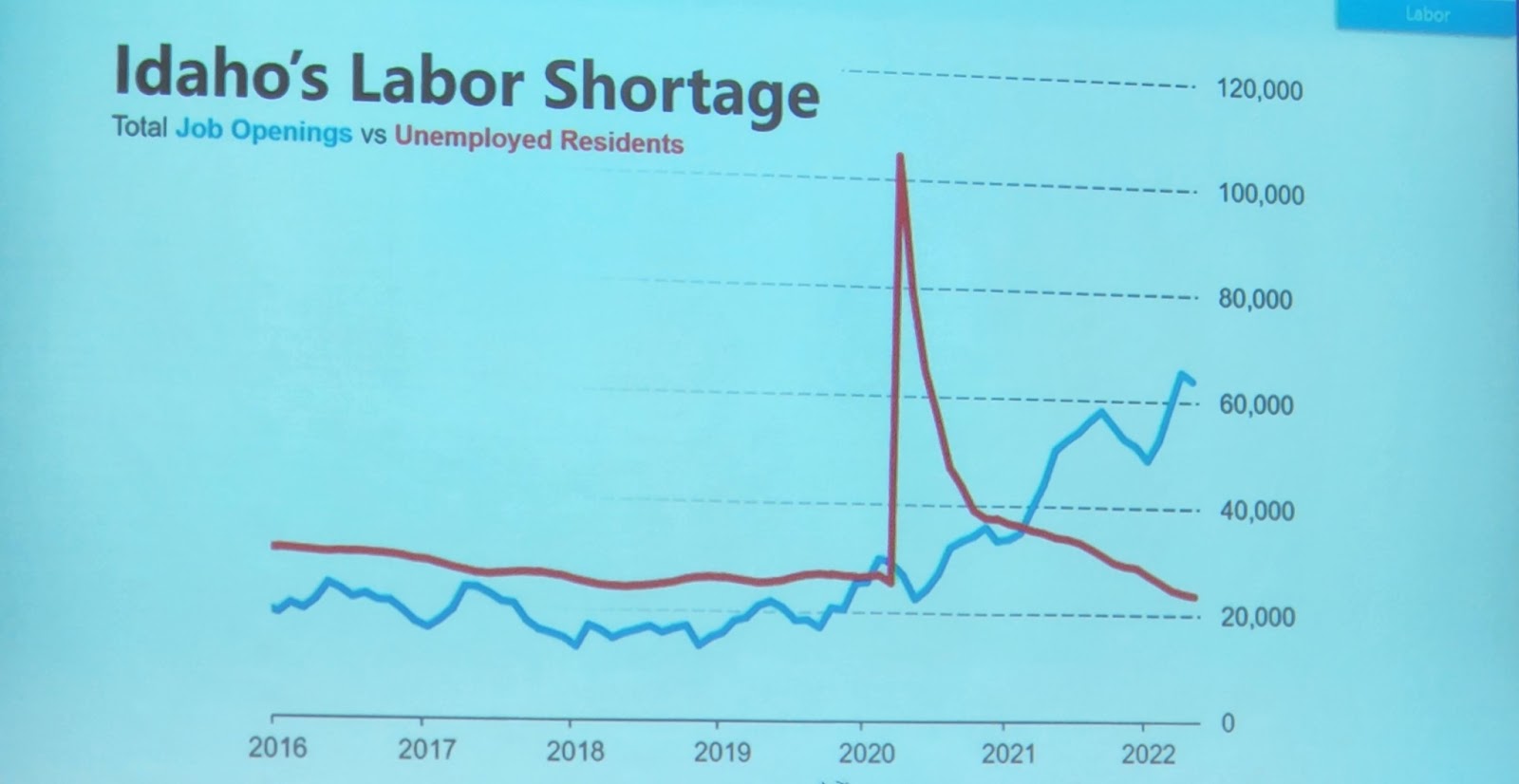
  • The labor supply will be a limiting factor for economic growth in northern Idaho.
  • Idaho had the highest “quit rate” in December 2022 according to a Wall Street Journal article.
  • Over 22,000 retirees have come to the CdA region. 75% of in-migration consisted of people age 65+.
  • In the year 2000, Idaho boasted six workers per retiree. Today there are 3.7 workers per retiree.

CDA 2030 to Rebrand Connect Kootenai

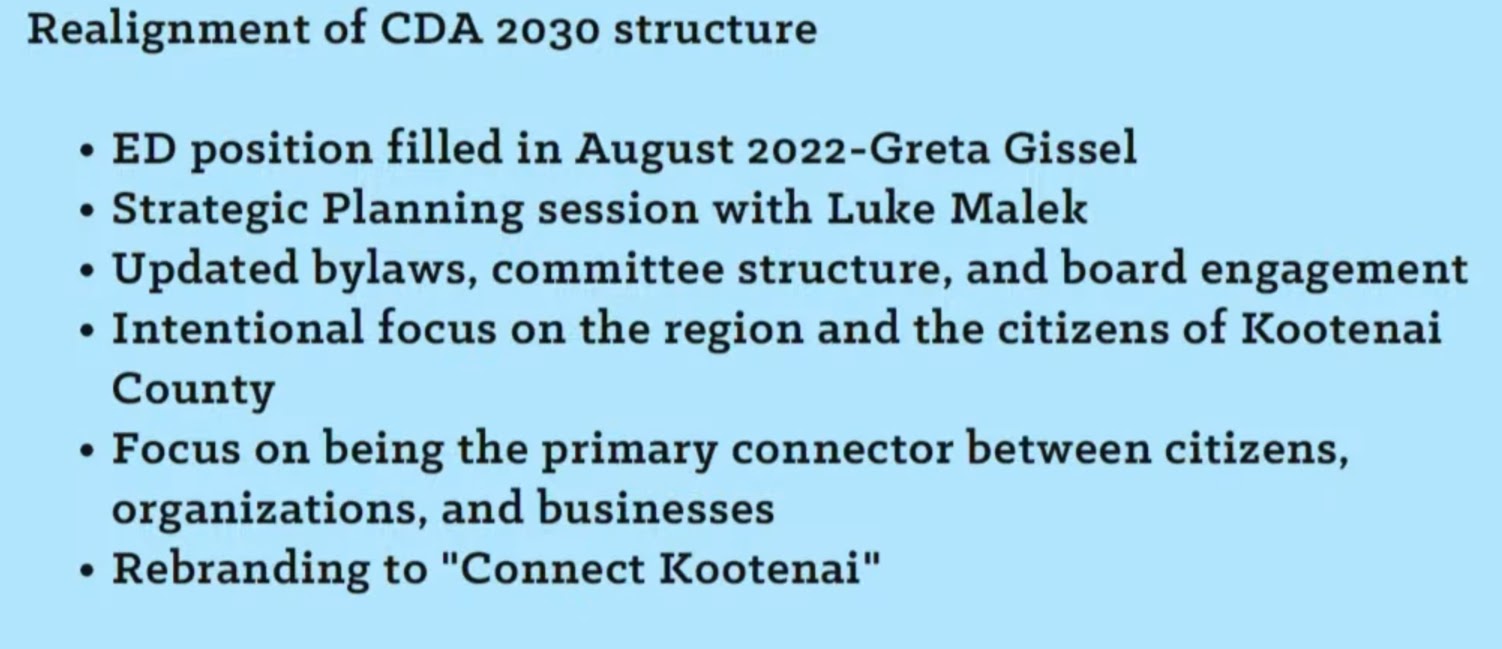
Executive Director stated CDA 2030 will rebrand to Connect Kootenai in 2023

Greta Gissell, Executive Director of CDA 2030, indicated at a recent urban renewal meeting that the oraganization will rebrand to Connect Kootenai in 2023.

Stated goals of Connect Kootenai are as follows:

Board members and sponsors are listed in the images below.

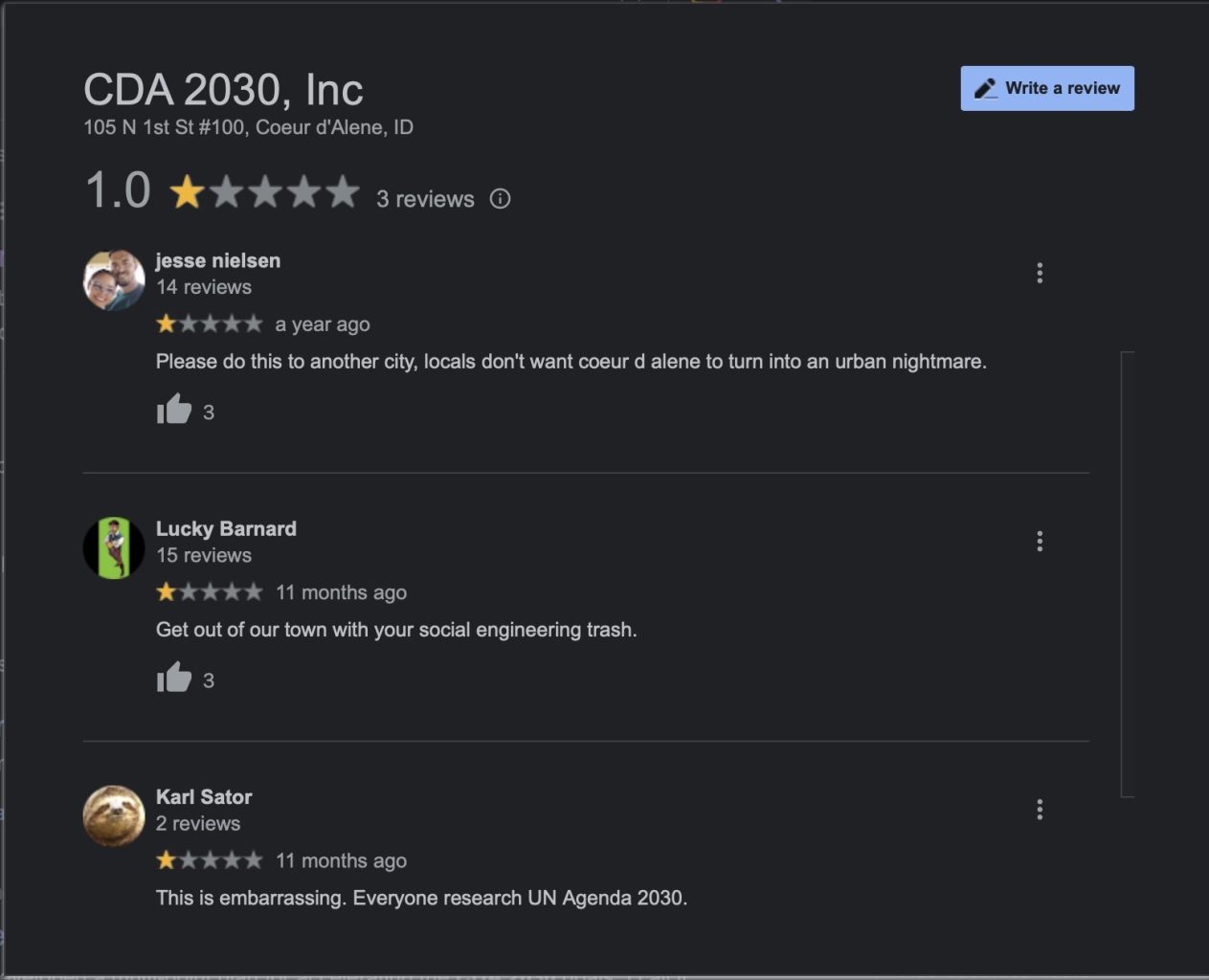
The organization has been under some level of scrutiny from suspicious citizens, some of which have posted reviews online to voice their concerns.

CDA 2030, lauded by city planners and contributed thousands of voluteer hours to the future of Coeur d’Alene. Perhaps the rebrand will alleviate the concern, albeit misplaced, the previous name engendered.

Airpods: Should You Buy “Clones?”

Photo by <a href="https://unsplash.com/@avisualls?utm_source=unsplash&utm_medium=referral&utm_content=creditCopyText">Aniket Narula</a> on <a href="https://unsplash.com/s/photos/airpods?utm_source=unsplash&utm_medium=referral&utm_content=creditCopyText">Unsplash</a>
Photo by Aniket Narula on Unsplash

AirPods are a popular brand of wireless earbuds produced by Apple. They are known for their compact size, ease of use, and high-quality sound. However, due to their popularity, there are also many replicas or knock-off versions of AirPods available on the market. These replicas are often significantly cheaper than the real thing, but they may not offer the same level of quality or features.

One of the main differences between real AirPods and replicas is the sound quality. While real AirPods have been praised for their clear and balanced sound, replicas often have lower quality audio and may produce distorted or cheap sounds. In addition, real AirPods use advanced noise-canceling technology to reduce external noise and provide a more immersive listening experience. Some replicas do not have this feature or may have less effective noise-canceling capabilities.

Another difference is the durability and reliability of the product. Real AirPods are made with high-quality materials and are designed to withstand daily wear and tear. Replicas, on the other hand, may be made with cheaper materials and may not be as durable. In addition, real AirPods are backed by a manufacturer’s warranty and have a proven track record of reliability. Replicas may not offer the same level of protection or support if they break or malfunction.

Finally, real AirPods offer a range of features and connectivity options that may not be available on replicas. For example, real AirPods can be controlled with voice commands, have automatic switching between devices, and offer seamless integration with other Apple products. Replicas may not offer these features or may have limited compatibility with other devices.

In conclusion, while replicas of AirPods may be tempting due to their lower price, they may not offer the same level of quality, durability, or features as the real thing. It is important to carefully consider the trade-offs before purchasing a replica and to be aware of the risks and limitations of these products.

-N.P.

Burgers to Sink Your Teeth Into: A Review of Burger Dock

Burger Dock, in Coeur d’ Alene, Idaho, is great. This burger place has a lot. From milkshakes, to fries and onion rings, there’s so much. Also, every single one of their burgers are made with 100% angus beef, but the most juicy part of this is the history.

The Old Tin Can

Their story begins with someone named Savannah Pennington, who moved from dusty Nevada, to Sandpoint. With her old trailer, she put up “The Old Tin Can,” a mobile burger place. She quickly became popular, and with that she needed to expand.

Partners?

The Andersons, a family that had roots in Sandpoint for over 30 years, heard about this successful, but small, business. This was the beginning of a beautiful relationship. The history of Burger Dock in Coeur d’Alene is a story of hard work, dedication, and a commitment to excellence. From its humble beginnings as a small burger joint, Burger Dock has grown and evolved into one of the most beloved restaurants in the area, and a testament to the power of good food, good service, and a strong sense of community.

Expect to pay $15-20 per person for a meal.

By: O.P.